A 3mdeb design pattern
Rack-scale firmware development.
On your desk.
BenchRack mirrors a rack-scale system on commodity hardware and reference designs - so your team can bring up firmware and OS locally, before ever touching production racks.
The problem
Rack-scale systems don't fit on a desk
Monolithic by design
The entire rack must be assembled and powered before it does anything useful.
Prohibitive cost and footprint
A full rack system is out of reach for small teams - and it definitely won't sit on a desk.
Remote access falls short
Low-level firmware work needs local hands on serial consoles and SPI flash headers.
No spare unit to borrow
A single compute unit can't be pulled out of the rack for local experimentation.
Slow iteration
Every firmware change means scheduling rack access, coordinating a team, and hoping a single flash attempt doesn't take the whole system down.
Why now
Rack-scale demand is accelerating
GPU accelerator pods
Dozens of tightly-coupled accelerators packed into a single rack unit, managed as one system.
Hyperscaler rack designs
Proprietary firmware stacks spanning compute, networking, and power management at rack level.
Compute has to scale fast
New rack-scale platforms must be evaluated and brought up before they're widely available - de-risking procurement and deployment decisions.
Reproducing these at bench scale matters
- Firmware and OS bring-up moves to a bench-side twin first - production racks only see code that already works.
- CI/CD loops close faster - no scheduling time on a shared rack.
- Hardware-in-the-loop feedback happens locally, not on shared infrastructure.
- The same approach carries over to the next rack-scale platform.
Vision
Divide and conquer, applied to firmware
Rack-scale systems get tractable the same way every hard engineering problem does: by decomposing them into pieces you can reason about, verify, and fix independently. BenchRack exists to build that firmware due-diligence and patching harness - one component at a time, instead of betting an entire rack-scale system on a single flash.
Divide et impera
Traditionally attributed to Philip II of Macedon, who broke the power of the Greek city-states by tackling them one at a time rather than all at once.
- Break a monolithic rack into independently testable components, and each one becomes small enough to actually reason about.
- Fixes and validation happen one piece at a time, not as an all-or-nothing gamble on the full system.
- The same principle carries over to compliance: OCP SOLID breaks datacenter security into per-component requirements, and OCP SAFE verifies each device against them one at a time, through escalating scopes, rather than one spec and one audit for an entire system.
- The same run that produces a fix also validates it on a physical twin and emits the compliance evidence as a byproduct - not a separate audit pass.
- It's applied to server-class host firmware, not microcontroller territory - and built on public specs throughout, not a closed, self-hosted tier.
How it works
How the BenchRack pattern works
BenchRack isn't a product you buy off the shelf - it's the approach 3mdeb uses to shrink a rack-scale system down to a single desk-side unit, so firmware and OS work can move at developer speed instead of rack-scheduling speed.
A reusable blueprint
At its core, BenchRack pairs a remote control environment with the target's own server board, plus whatever extra services a platform needs. Swap in different target infrastructure and the same blueprint fits a different rack-scale system.
- Any rack-scale system can have a BenchRack analog.
- Only the target-specific pieces change - everything else about the pattern carries over.
Real-world proof
A BenchRack you can order today
The pattern isn't just theory: Dasharo BenchRack for the ASRock TURIND8UD-2T/X550 ships today, running open firmware and controlled end-to-end through an RTE.
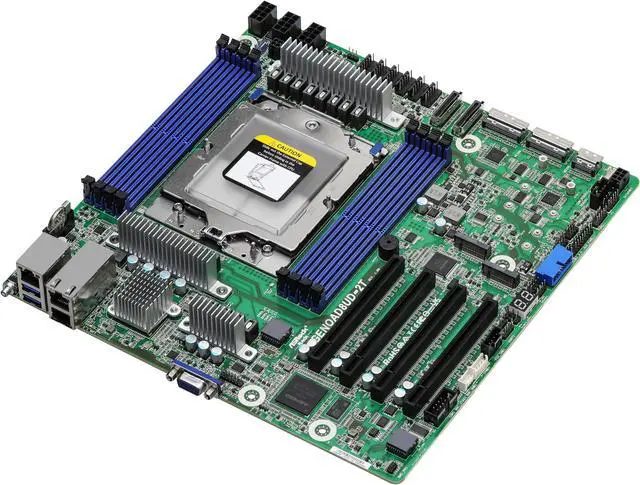
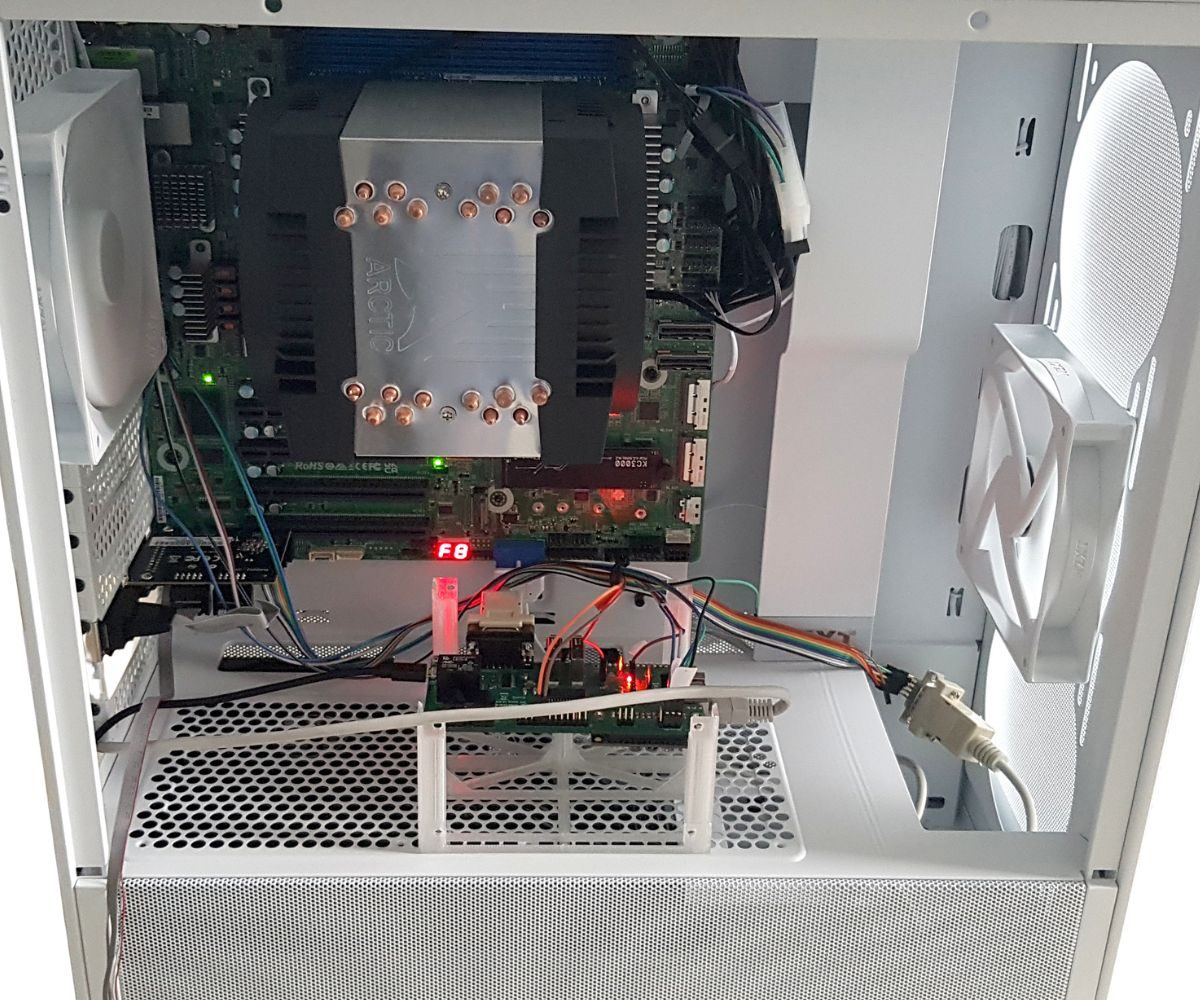
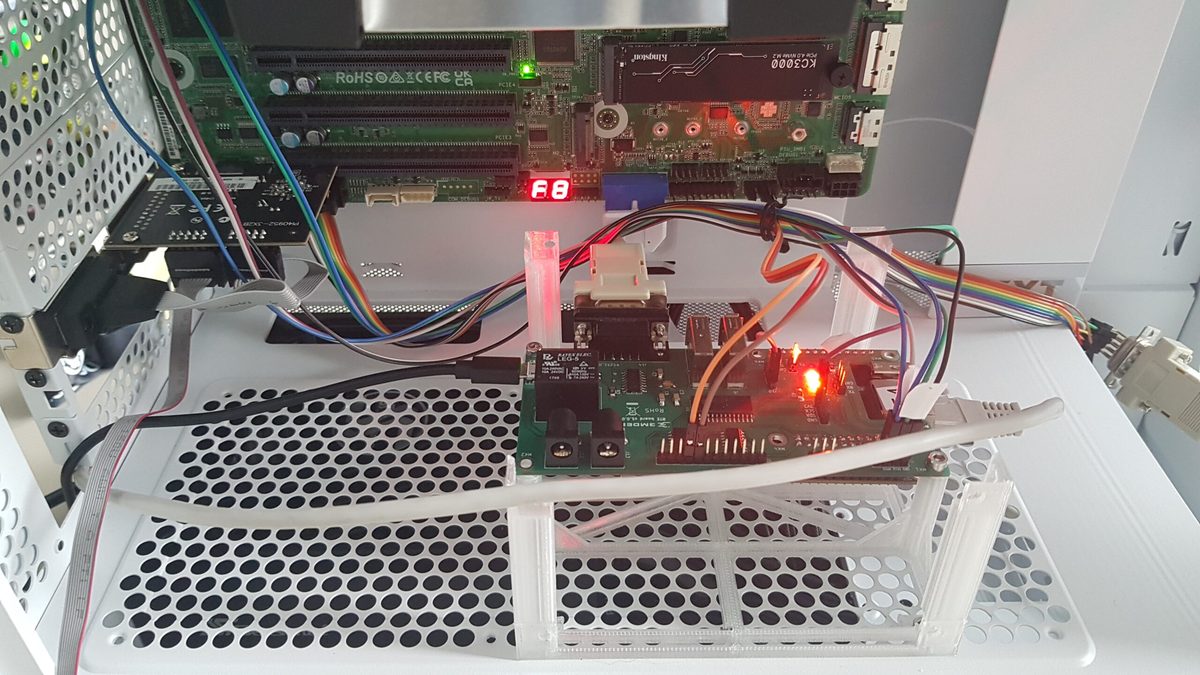
benchctl drives the bench remotely - flashing, power, and serial, all through the RTE, a solution that has been proven over many years.It also doubles as a reference for compliance showcasing, firmware due-diligence, and decomposing complex rack systems.
See it in the 3mdeb shopCPU
Single-socket SP5, AMD EPYC 9005 series
Memory
8x DDR5 RDIMM, up to 6400 MHz
Expansion
4x PCIe 5.0/CXL 2.0 x16, 2x M.2 (PCIe 5.0 x4)
Networking
Onboard 10 GbE
See it in action
BenchRack, running
A short excerpt showing the bench in operation - firmware flashed and validated end to end through the RTE, no rack required.
Scoring
The BenchRack scorecard
Beyond the pattern itself, here's how the reference BenchRack actually scores - security posture, firmware openness, and validation results, measured and unedited.
Host Security ID
Openness Score
Same board, two firmware stacks - the Dasharo openness-score utility measures how much of each is actually open source.
See the full breakdown →OSFV Validation Results
Dasharo's Open Source Firmware Validation (OSFV) suite - automated checks across CPU, TPM, NVMe, USB, DMI, and boot integrity.
One known, tracked failure: Boot-log sanity check.
See the full results →Boot Time
Measured end to end from power-on, including PSP firmware initialization.
Compliance
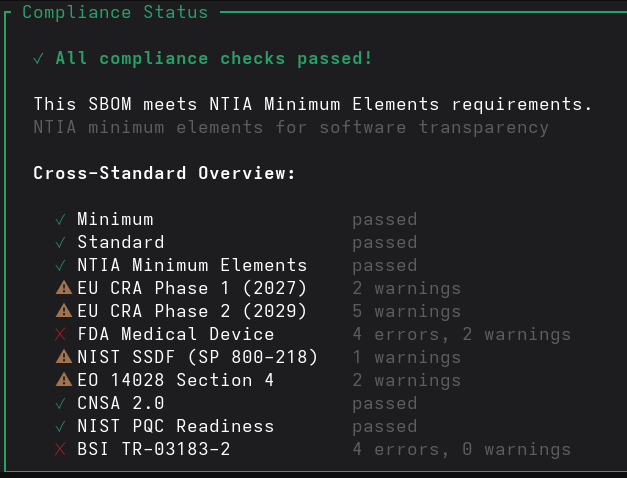
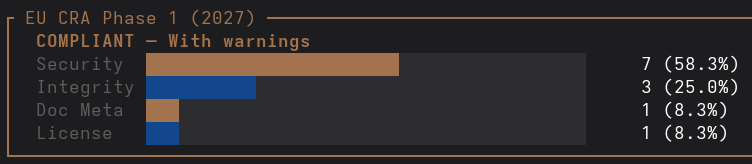
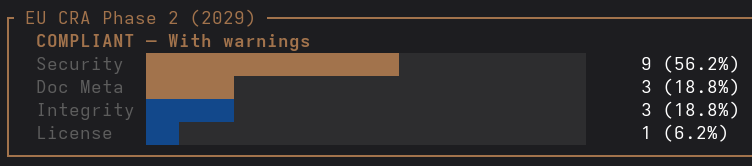
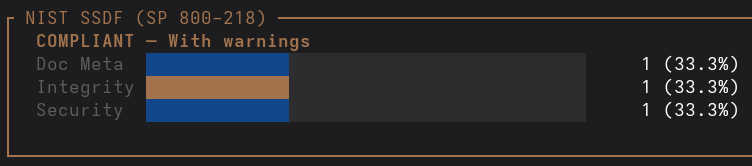
What our SBOM actually proves
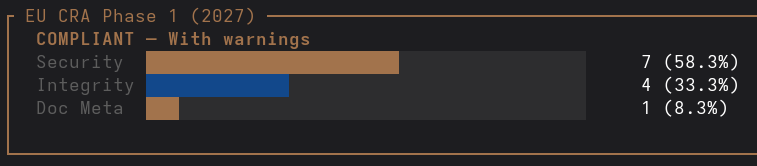
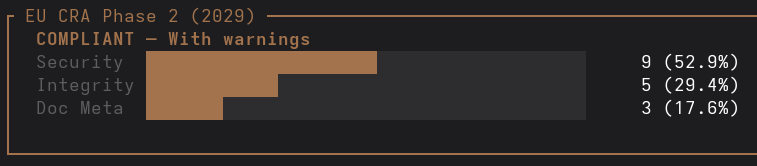
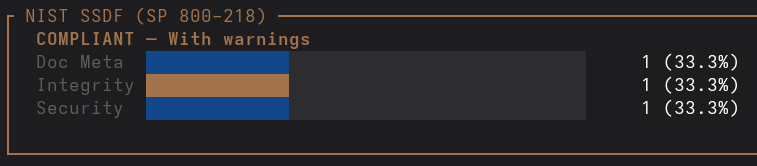
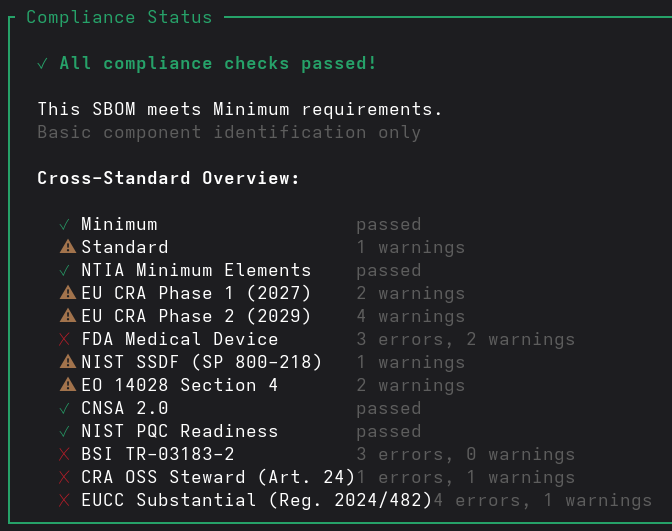
Every BenchRack build produces a software bill of materials (SBOM), checked automatically against the standards that matter for firmware. Here's a real, unedited result for each firmware variant - warnings included.
What's next
Coverage is expanding toward SOC 2, FedRAMP, DoD IL5/IL6, NIST SP 800-53. ISO 27001 and IEC 62443 are on the roadmap too.
Plans
What's next for BenchRack
Speaking at BSMConf
“The Autonomous Firmware Factory: BenchRack and the Agentic Pipeline Redefining Open-Source Firmware Enablement” - Michał Żygowski
Speaking at BSMConf
“Unboxing Compliance: Tooling Lessons Learned from Scaling Our BenchRack Score” - Artur Raglis, Kamil Aronowski
Speaking at BSMConf
“Host Security ID (HSI) on AMD servers today and tomorrow” - Michał Żygowski
Training at BSMConf
“Autonomous Dasharo Firmware Porting for ARM: Hands-On with BenchRack” - Michał Żygowski
Training at BSMConf
“Autonomous OpenBMC Porting: Hands-On BMC Bring-Up with BenchRack” - Maciej Pijanowski
Additional BSMConf sessions may be announced as the conference date approaches - subscribe below for updates.
Need a BenchRack for your platform?
The case study above shows what the pattern can do. Tell us about your rack-scale platform and we'll help you build your own bench-side sandbox.